
Long Island's Premier Criminal & DWI Defense Law Firm

PL 240.26: Harassment in the Second Degree in New York
PL 240.26 is a violation, not a crime — which makes it both the lowest-level charge in the Penal Law and the most common landing spot when a misdemeanor gets negotiated down. Over 500 harassment cases a year run through Nassau and Suffolk County District Court, the large majority of them in Suffolk. If you have been charged, call Hochhauser Criminal & DWI Defense at 516-939-1529.
PL 240.26 penalties
| Charge | Statute | Level | Maximum |
|---|---|---|---|
| Harassment 2nd | PL 240.26(1) | Violation — not a crime | 15 days, $250 fine |
| Aggravated harassment 2nd | PL 240.30(1)(a) | Class A misdemeanor | 364 days, $1,000 fine |
The distinction matters more than the numbers do. A violation is not a crime in New York, so a PL 240.26 conviction is not a criminal conviction and does not answer “yes” to the question most job applications ask. Probation is not even available for a violation — the realistic outcomes are a conditional discharge, a fine, an adjournment in contemplation of dismissal, or time served.
Charged with harassment on Long Island?
An order of protection usually issues at arraignment, and it can bar you from your own home. Call 516-939-1529 or request a free case review.
What PL 240.26 requires
Under PL 240.26(1), the People must prove that with intent to harass, annoy or alarm another person, you struck, shoved, kicked or otherwise subjected them to physical contact — or attempted or threatened to do so. There is no injury element and no requirement of pain. A grab of the wrist qualifies. So does a threat to hit that never lands.
Because the bar is that low, the fight is almost always about intent. Contact incidental to a struggle over a phone, a door, or car keys is not contact intended to harass. Neither is separating people in a fight, or pulling away from someone.
Aggravated harassment and why the statute was rewritten
PL 240.30 is the misdemeanor cousin, and it has a history worth understanding. In 2014 the New York Court of Appeals struck down the old version of PL 240.30(1) as both unconstitutionally vague and overbroad, because it criminalized communication made “in a manner likely to cause annoyance or alarm” — language that swept in protected speech. The Legislature rewrote the subdivision months later.
The current version is considerably narrower. It requires intent to harass, a communication containing an actual threat of physical harm or unlawful harm to property, and that you knew or reasonably should have known the communication would cause reasonable fear of that harm. Annoying, insulting or angry messages are not enough. There has to be a threat.
There is also a live argument available on the mens rea. In 2023 the United States Supreme Court held that true-threats prosecutions require some subjective understanding by the defendant of the threatening nature of the statement — at least recklessness — and rejected a purely objective standard. New York’s “reasonably should know” language is an objective standard on its face. No New York appellate court has yet applied that holding to PL 240.30(1)(a), so this is an argument to make rather than settled law, but it is a real one.
Defenses to a PL 240.26 charge
- Intent. The contact happened, but not to harass, annoy or alarm. This carries most defensible cases.
- Justification. Defense of yourself, another person, or property.
- Facial insufficiency. The accusatory instrument must allege non-hearsay facts establishing every element. Conclusory pleadings that just track the statute are routinely dismissible.
- Protected speech. An angry statement without a true threat is not aggravated harassment, and the Court of Appeals has said so.
- Cross-complaint dynamics. In a mutual dispute, the complainant is frequently just whoever called first.
Harassment as a family offense
Both PL 240.26 and PL 240.30 are family offenses when the parties are married, formerly married, related, share a household, have a child in common, or are in an intimate relationship — a category that does not require living together and routinely covers dating relationships. That means Family Court and criminal court have concurrent jurisdiction, and a complainant can pursue both at once. See domestic violence charges.
Where harassment cases are heard
| County | Court | Address |
|---|---|---|
| Nassau | Nassau County District Court | 99 Main Street, Hempstead, NY 11550 |
| Suffolk | Suffolk County First District Court | 400 Carleton Avenue, Central Islip, NY 11722 |
These charges are filed overwhelmingly more often in Suffolk than in Nassau, which reflects charging practice rather than behavior. We handle them in Nassau County and Suffolk County.
PL 240.26 frequently asked questions
Is harassment a crime in New York?
Harassment in the second degree is a violation, not a crime. Aggravated harassment in the second degree is a Class A misdemeanor, and that one is a crime.
Will it show up on a background check?
A violation is not a criminal conviction, and the record of it is sealed. That is precisely why it is the target disposition in so many misdemeanor cases.
Can I be charged for text messages?
Under PL 240.26(1), no — that subdivision requires physical contact or a threat of it. Threatening messages are charged under PL 240.30, and only where the message contains an actual threat of physical or property harm.
The other person contacted me first. Does that help?
It goes directly to intent and it matters to how a prosecutor sees the case. If there is an order of protection in place, though, contact can be charged as criminal contempt regardless of who reached out.
Recent results
Dismissed & sealed
Harassment
Nassau County District Court, 2026. A harassment case ended in an ACD with an order of protection: dismissed and sealed.
More results: our successful cases.
Prior results do not guarantee a similar outcome.
Speak with a Long Island harassment defense lawyer
Richard Hochhauser handles these cases in Nassau and Suffolk County constantly, both as charged and as the reduction target from a misdemeanor. Small as the maximum penalty is, the order of protection that comes with it can reshape your living arrangements overnight.
Free consultation — 516-939-1529
Hochhauser Criminal & DWI Defense
164 Jackson Street, Hempstead, NY 11550
516-939-1529 · RH@Hochhauserlaw.com
This is general information about PL 240.26 harassment in New York and is not legal advice. Every case turns on its own facts. Contacting our firm does not create an attorney-client relationship.
Charged with stalking as well? See our page on Stalking (PL 120.45).
Our Offices


Garden City Office
1225 Franklin Ave #325
Garden City, NY 11530
Phone: (516) 939-1529
Appointments Only
See What Our Clients Are Saying
During what was one of the scariest times of my life, he gave me all of the knowledge and support possible to help me get through it. Not only did I end up getting a great outcome for my case, but Richard helped make it a very smooth process and was always there when I had...

Mr. Hochausser worked hard on my behalf.. so hard that he achieved what seemed impossible. He always communicated with me honestly and earnestly, which is rare in any profession these days. He was prepared and forthright every step of the way. I hope to never need his services...
Best Criminal Attorney in New York. Richard explains each detail slowly and carefully so it’s easily understood. He handles each case as if it’s the most important. Highly recommend!
Best DWI lawyer in New York!
Mr. Hochhauser was incredible. I was consulted immediately after the first call. Richard was easy to keep in touch with and would answer all of my emails, phone calls, and even texts regarding my concerns. Guided me through the whole process, made sure I understood everything...
Richard explained the matters of my case thoroughly and was professional and effective in dealing with the charges I was facing, ultimately getting the docket dismissed in its entirety. I would highly recommend procuring his services.
Was in a bad spot but Richard Hochhauser got me great results on my DWI case in Nassau County. Highly Recommend!!!
Can't thank Richard enough. He went aobve and beyond for me. Never had any issues with the law before and he made sure I had no record. Great Criminal Attorney!!!
Was never really in trouble before. And just googled best criminal attorney near me. Feel so lucky that Richard was the one I called. He really fought for me was very knowledgeable. Highly recommend!!
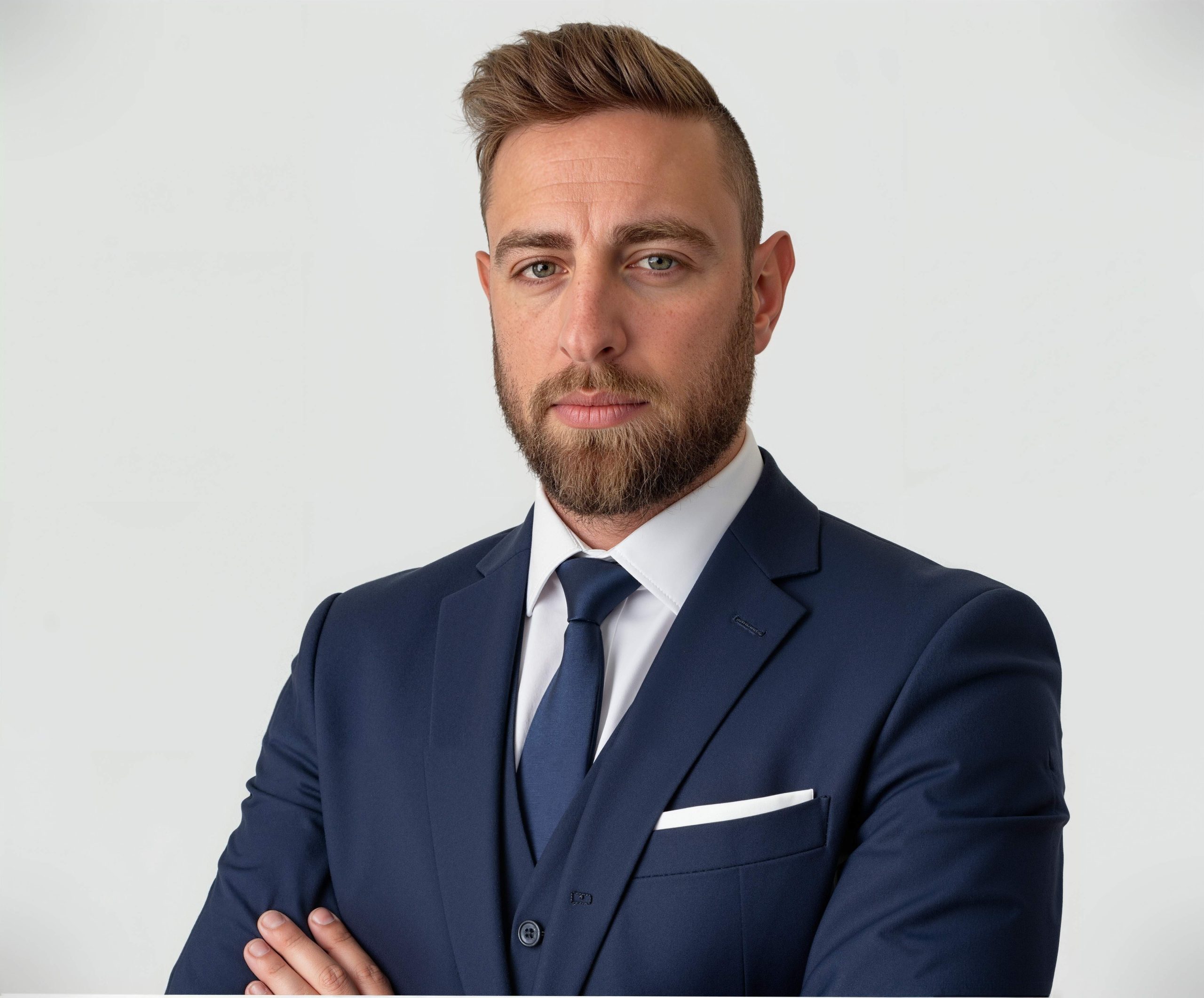
Call Now to schedule a Free Consultation with Richard Hochhauser
Call or text anytime.