
Long Island's Premier Criminal & DWI Defense Law Firm



VTL 1192(3): Common Law DWI in New York
A charge under VTL 1192(3) — common law DWI — does not require a breath test result at all: the prosecution can convict you on an officer’s description of your driving, your eyes, your speech, and how you performed on roadside tests. Here is the exposure you are facing, and how these cases are actually fought. If you were arrested, call Hochhauser Criminal & DWI Defense at 516-939-1529.
Penalties for a common law DWI conviction
A first common law DWI is an unclassified misdemeanor. A second or third within ten years becomes a felony under VTL § 1193.
| Offense | Level | Fine | Maximum jail | License |
|---|---|---|---|---|
| First | Misdemeanor | $500 – $1,000 | 1 year | Revoked at least 6 months |
| Second within 10 years | Class E felony | $1,000 – $5,000 | 4 years | Revoked at least 1 year |
| Third within 10 years | Class D felony | $2,000 – $10,000 | 7 years | Revoked at least 1 year |
Every conviction under VTL 1192(3) also requires an ignition interlock device for at least twelve months as a condition of probation or conditional discharge, plus a mandatory alcohol and substance abuse screening.
Arrested for DWI on Long Island?
If you refused the breath test, the DMV must provide a refusal hearing within 15 days of arraignment — and failing to appear waives it. Call 516-939-1529 today or request a free case review.
What is VTL 1192(3) in New York?
New York’s DWI statute contains several separate offenses. VTL 1192(3) makes it a crime to operate a motor vehicle while in an intoxicated condition. Notably, there is no number attached to it. Where VTL 1192(2) requires proof that your blood alcohol content was .08 or higher, VTL 1192(3) asks the jury a different question: were you, by common experience, intoxicated to the point that you could not operate the vehicle as a reasonably prudent driver?
| VTL 1192(2) — Per Se DWI | VTL 1192(3) — Common Law DWI | |
|---|---|---|
| Proof required | BAC of .08 or more | Observable intoxication |
| Chemical test needed? | Yes | No |
| Typical evidence | Breath or blood analysis, calibration records | Driving pattern, odor, slurred speech, bloodshot eyes, unsteadiness, field sobriety tests, video |
| Charged after a refusal? | Rarely | Almost always |
| Penalty | Identical | Identical |
Both counts are frequently charged together off a single arrest. Because the penalties are identical, however, the fight is usually about which count the People can actually prove.
The costs nobody warns you about
| Item | Amount |
|---|---|
| Mandatory surcharge, misdemeanor DWI | $400 |
| Crime victim assistance fee | $25 |
| Driver Responsibility Assessment | $250 per year for 3 years ($750) |
| Chemical test refusal civil penalty | At least $500, plus a 1-year revocation |
| Ignition interlock installation and monitoring | Typically $75 – $150 per month |
Insurance is the quiet one. Indeed, a DWI conviction commonly doubles or triples a premium for years, and some carriers will not renew at all.
Two cases, not one: court and DMV
A VTL 1192(3) arrest starts two separate proceedings. First, the criminal case proceeds in District Court. If you refused the breath test, a separate DMV refusal hearing determines whether your license is revoked for a year and whether you pay the civil penalty — regardless of what happens in the criminal case. The department must provide that hearing within fifteen days of your arraignment, and failing to appear waives it. Missing it is one of the costliest mistakes a person can make, and it happens because nobody explains the deadline at the precinct. See our page on chemical test refusal for how these hearings work.
Defenses to a VTL 1192(3) charge
Because VTL 1192(3) rests on human observation rather than a machine, it is attacked differently than a per se case:
- No lawful basis for the stop. If the officer lacked reasonable suspicion, everything after the stop can be suppressed.
- Field sobriety tests done wrong. The standardized tests have strict administration protocols. Uneven pavement, traffic, footwear, injuries, weight, and age all distort results, and the officer’s own bodycam frequently shows it.
- Innocent explanations for the “signs.” Bloodshot eyes, fatigue, allergies, medical conditions, diabetes, anxiety, and a language barrier all mimic intoxication.
- No proof of operation. The People must prove you actually operated the vehicle. Accident and parked-car cases often cannot establish who was driving or when.
- Miranda and refusal warnings. Refusal evidence is admissible only if the warnings were clear and persistent. Defective warnings can keep the refusal out.
- Video that contradicts the report. The written narrative and the recording tell different stories more often than most people expect.
Meanwhile, many first-offense cases without an accident or a very high BAC resolve to a reduced charge such as DWAI, a traffic infraction rather than a crime. That outcome is a negotiation, however, and it depends heavily on the strength of the file and the lawyer working it.
Long Island DWI courts
| County | Court | Address |
|---|---|---|
| Nassau | Nassau County District Court | 99 Main Street, Hempstead, NY 11550 |
| Suffolk | Suffolk County First District Court | 400 Carleton Avenue, Central Islip, NY 11722 |
We defend DWI cases throughout Nassau County and Suffolk County, including every village and justice court on Long Island.
VTL 1192(3) frequently asked questions
Can I be convicted without a breath test?
Yes. That is the entire point of the common law count. Officer observations, field sobriety tests, and video can support a conviction with no BAC number in evidence.
What is the difference between VTL 1192(2) and VTL 1192(3)?
VTL 1192(2) requires a BAC of .08 or higher. VTL 1192(3) requires proof of intoxication by observation. The punishments are identical, and both are often charged from one arrest.
Will I lose my license immediately?
Your license is typically suspended at arraignment. Many first offenders qualify for a hardship privilege and later a conditional license through the DMV’s Impaired Driver Program. See our page on DWI license suspension.
Can the charge be reduced to DWAI?
Often, in a first-offense case with no accident, no injury, and a defensible file. A DWAI is a traffic infraction, not a crime, which is a meaningful difference on a background check.
Is a first DWI a felony in New York?
No. A first VTL 1192(3) is a misdemeanor. It becomes a felony on a second conviction within ten years, or where a child under 16 was in the vehicle.
Talk to a Long Island DWI defense lawyer
Richard Hochhauser has spent his career defending impaired driving cases in Nassau and Suffolk County. A common law DWI is built on one officer’s description of you on the worst night you have had in a long time — and that description can be tested. Learn more about our DWI defense practice or about Richard Hochhauser.
Free consultation — 516-939-1529
Hochhauser Criminal & DWI Defense
164 Jackson Street, Hempstead, NY 11550
516-939-1529 · RH@Hochhauserlaw.com
This is general information about VTL 1192(3) in New York and is not legal advice. Every case turns on its own facts. Contacting our firm does not create an attorney-client relationship.
¿Habla español?
Lea esta página en español: DWI — manejar en estado de ebriedad. Hablamos español — llame al 516-939-1529.
Live in New York City? If you were arrested on Long Island but live in Brooklyn, Queens, the Bronx, Manhattan or Staten Island, our guide for New York City residents covers which courthouse has your case, when your lawyer can appear without you, and how to get there from your borough.
Arrested for DWI on Long Island? Read about our Long Island DWI defense, or go straight to our Nassau County DWI lawyer or Suffolk County DWI lawyer page.
Our Offices


Garden City Office
1225 Franklin Ave #325
Garden City, NY 11530
Phone: (516) 939-1529
Appointments Only
See What Our Clients Are Saying
During what was one of the scariest times of my life, he gave me all of the knowledge and support possible to help me get through it. Not only did I end up getting a great outcome for my case, but Richard helped make it a very smooth process and was always there when I had...

Mr. Hochausser worked hard on my behalf.. so hard that he achieved what seemed impossible. He always communicated with me honestly and earnestly, which is rare in any profession these days. He was prepared and forthright every step of the way. I hope to never need his services...
Best Criminal Attorney in New York. Richard explains each detail slowly and carefully so it’s easily understood. He handles each case as if it’s the most important. Highly recommend!
Best DWI lawyer in New York!
Mr. Hochhauser was incredible. I was consulted immediately after the first call. Richard was easy to keep in touch with and would answer all of my emails, phone calls, and even texts regarding my concerns. Guided me through the whole process, made sure I understood everything...
Richard explained the matters of my case thoroughly and was professional and effective in dealing with the charges I was facing, ultimately getting the docket dismissed in its entirety. I would highly recommend procuring his services.
Was in a bad spot but Richard Hochhauser got me great results on my DWI case in Nassau County. Highly Recommend!!!
Can't thank Richard enough. He went aobve and beyond for me. Never had any issues with the law before and he made sure I had no record. Great Criminal Attorney!!!
Was never really in trouble before. And just googled best criminal attorney near me. Feel so lucky that Richard was the one I called. He really fought for me was very knowledgeable. Highly recommend!!
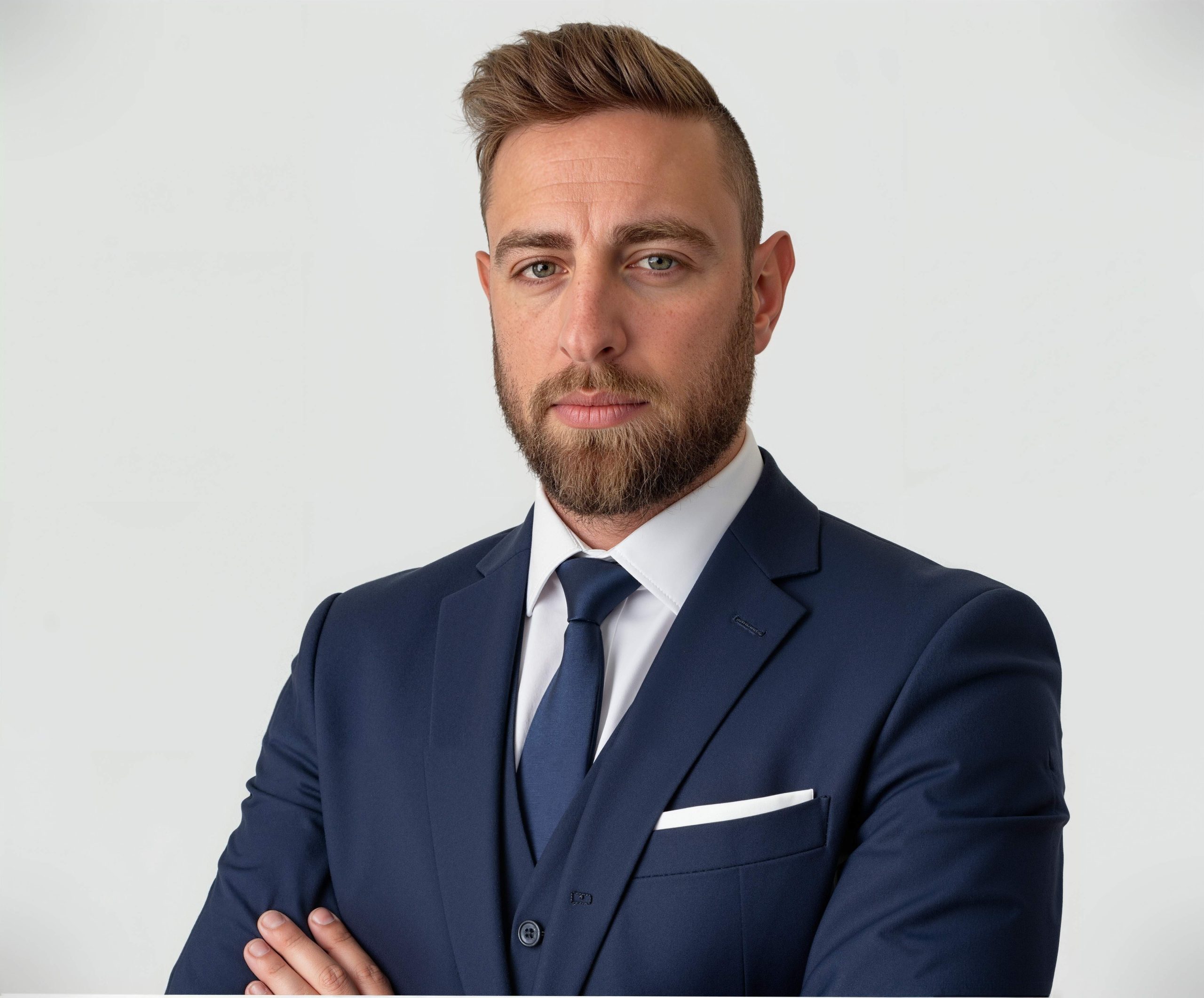
Call Now to schedule a Free Consultation with Richard Hochhauser
Call or text anytime.